How to Find the Right Therapist: A Thoughtful Guide to Getting It Right
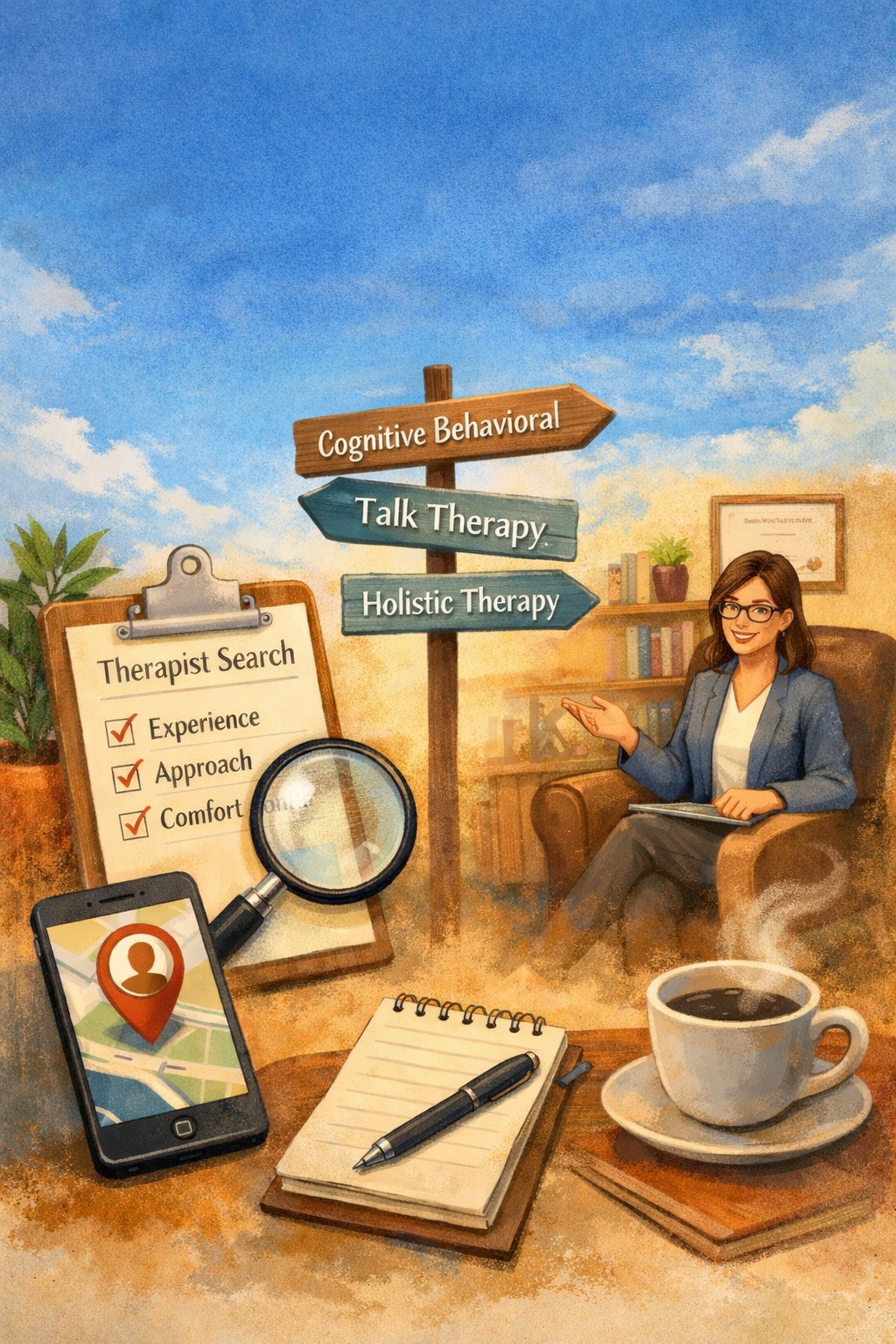
Choosing a therapist is a deeply personal decision, one that deserves care, discernment, and intention. In a landscape where options are abundant, it’s easy to focus on credentials, modalities, or availability. While these matter, they are not what ultimately determines the success of therapy. At its core, effective therapy is about fit, a nuanced alignment between you, your needs, and the person sitting across from you, or meeting you online.
Research into how clients actually choose therapists suggests that this decision is rarely purely rational. Instead, people draw on a combination of perceived expertise, interpersonal warmth, and an intuitive sense of trust when deciding who feels “right” (Spalter, 2014).
This guide is designed to help you approach that process with clarity and confidence.
Prioritise the Relationship Above All Else
The most consistent predictor of meaningful therapeutic outcomes is not the specific technique used, but the quality of the therapeutic relationship (McElvaney & Timulak, 2013; Spalter, 2014; Varker et al., 2019)
Clients who benefit most from therapy often describe:
Feeling deeply understood
Experiencing a sense of psychological safety
Engaging in a collaborative, respectful dynamic
Importantly, first impressions matter more than we might expect. Research suggests that clients often make early judgments about therapists based on subtle interpersonal cues, including perceived empathy, relatability, and emotional presence (Spalter, 2014).
There is something subtle but unmistakable about a good fit. You feel it early, not as immediate comfort, but as a sense that you can gradually bring more of yourself into the room.
A useful internal check: Do I feel seen here in a way that goes beyond surface-level understanding?
Seek Alignment, Not Just Expertise
Clinical training and experience are essential, but they are not, on their own, sufficient. A highly skilled clinician may still not be the right therapist for you.
What matters is alignment:
Does their style match your preferences, whether structured or exploratory, direct or reflective?
Do they adapt to your pace, rather than applying a fixed framework?
Do you feel respected as an active participant in the process? (McElvaney & Timulak, 2013)
Evidence highlights that clients are not simply selecting a professional, they are choosing someone they feel they can engage with over time (Spalter, 2014). This includes factors such as perceived authenticity, emotional resonance, and whether the therapist feels “approachable” rather than distant or overly clinical.
In high-quality therapy, you are not positioned as a passive recipient of expertise, but as someone whose perspective is central to the work.
Understand the Role of Discomfort
Well-paced therapy often involves moments of discomfort, this is not a flaw in the process, but part of its depth ((McElvaney & Timulak, 2013; Spalter, 2014; Varker et al., 2019). Clients frequently report that meaningful change is accompanied by:
Increased emotional awareness
Confronting long-standing patterns
A sense of vulnerability before clarity emerges
At the same time, clients are more likely to remain engaged when that discomfort exists within a relationship that feels safe and attuned. When this balance is present, clients are more willing to stay with the process, even when it becomes challenging (Spalter, 2014).
The distinction to make is this:
Constructive discomfort tends to feel purposeful, even if it is challenging. You may notice moments of vulnerability, emotional intensity, or being gently stretched beyond your usual patterns. However, there is an underlying sense that the work is contained, that your therapist is attuned, and that you are not navigating it alone. There is space to pause, reflect, and make sense of what is emerging. Over time, this kind of discomfort often leads to insight, clarity, or a shift in how you understand yourself.
Misalignment, by contrast, feels disjointed rather than meaningful. You may leave sessions feeling confused, dismissed, or subtly judged. There can be a sense that your experiences are being misunderstood, minimised, or approached in a way that doesn’t resonate. Rather than feeling supported through challenge, you may feel exposed without sufficient safety or direction.
In practice, the difference is not about whether therapy feels comfortable, but whether it feels held.
A skilled therapist will help you navigate this distinction in a collaborative way. They will check in with your experience, adjust their approach where needed, and create space for you to voice uncertainty or discomfort. This ongoing calibration is part of the work itself, not a disruption to it.
Consider Practical Fit as a Form of Care
Sustainable therapy requires more than emotional readiness, it requires logistical alignment. Increasingly, telehealth has become a refined and effective option for many clients.
Evidence indicates that video and phone-based therapy can be as effective as in-person care for conditions such as anxiety, depression, and trauma-related presentations (Varker et al., 2019). It also offers:
Greater privacy and discretion
Flexibility within demanding schedules
Access to specialised care regardless of location
Accessibility also plays a role in whether clients initiate and remain in therapy. When therapy feels manageable and integrated into daily life, engagement is more likely to be sustained over time (Spalter, 2014).
From a high-level perspective, convenience is not a compromise, it is often what allows therapy to remain consistent and effective over time.
For a more nuanced discussion about Telehealth vs in person therapy, see my other post: Telehealth or not to Telehealth: Is in-person delivery of therapy more effective?
Notice the Early Indicators of Quality
You do not need to wait months to sense whether therapy is moving in the right direction.
Early signs of a strong therapeutic fit include:
A growing ease in speaking openly
A sense that sessions are purposeful, even when challenging
Subtle shifts in perspective, insight, or emotional clarity
Clients often describe effective therapy as a space where they begin to:
Understand themselves differently
Experience relief from internal tension
Develop more adaptive ways of responding to life
Crucially, clients who perceive early alignment with their therapist are more likely to continue therapy and experience meaningful outcomes (McElvaney & Timulak, 2013; Spalter, 2014).
Allow Space for Adjustment, But Not at the Expense of Fit
It is reasonable for therapy to take time to settle. The initial sessions are often about orientation, not transformation.
However, if over time you find yourself feeling:
Consistently misunderstood
Unable to engage openly
Disconnected from the process
It may be an indication that the fit is not optimal.
Clients are more likely to discontinue therapy when this sense of alignment is missing, even when the therapist is technically competent (Spalter, 2014). A high-quality clinician will approach this transparently and, where appropriate, support you in finding a better alignment elsewhere.
A Final Word
Finding the right therapist is not about making the perfect choice immediately. It is about approaching the process with intention, and trusting your internal sense of what feels aligned. At its best, therapy offers something rare, a space where you can be both fully supported and meaningfully challenged.
When that balance is present, growth tends to follow.
Resources for further information
McElvaney, J., & Timulak, L. (2013). Clients’ experience of therapy and its outcomes in good and poor outcome psychotherapy. Counselling and Psychotherapy Research, 13(4), 246–253. https://doi.org/10.1080/14733145.2012.761258
Spalter, D. (2014). How clients choose their psychotherapist: Influences on selecting and staying with a therapist (Doctoral thesis, Middlesex University, Metanoia Institute).
Varker, T., Brand, R. M., Ward, J., Terhaag, S., & Phelps, A. (2019). Efficacy of synchronous telepsychology interventions for people with anxiety, depression, posttraumatic stress disorder, and adjustment disorder: A rapid evidence assessment. Psychological Services, 16(4), 621–635. https://doi.org/10.1037/ser0000239